
About Richard Leighland
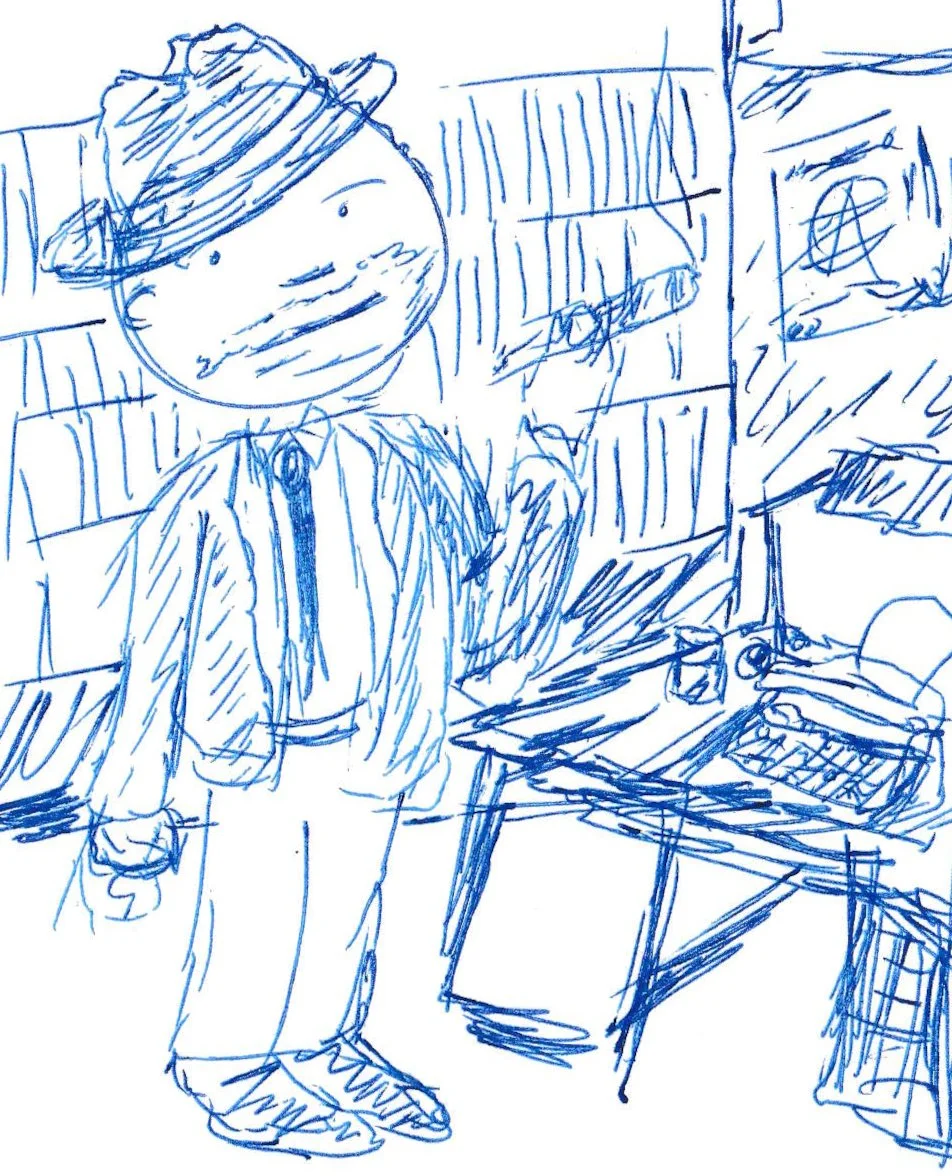
Author portrait drawn by Squirrel
Richard Leighland writes the kinds of stories he wants to read—ones that aren’t scared of meaning something, offending someone, or stepping on a few modern eggshells. He works as the managing editor for AZ Entertainment Group LLC and contributes reader’s guides for the AZ Classics imprint, mostly because he enjoys digging into books that haven’t been bubble-wrapped by committee.
He comes from an art background—oil, acrylic, watercolor, charcoal, pastels, graphite—and he treats writing the same way: no fixed method, no fixed genre, and no interest in coloring inside the lines. His novel House of Fate (second edition) looks like straight supernatural horror until you open it; then it becomes whatever it needs to be. That unpredictability runs through all his work. If readers walk away feeling something—anything—he considers it a success.
Leighland dislikes the current trend of softening every edge until literature is “safe.” His influences include authors who never asked permission: Ayn Rand, Toni Morrison, George Orwell, Dick Gregory, Donald Goines, Thomas Jefferson, Mark Twain, Oscar Wilde, Robert Parker, Robert Heinlein, and anyone else who understood that books aren’t supposed to tiptoe.
He doesn’t pretend to know what readers should start with. People should read whatever draws them in, not whatever made a list. He doesn’t separate editor, author, artist, or heretic—they’re the same impulse wearing different hats.
If someone hates his work, great. If they love it, even better. Indifference is the only real failure. Freedom of expression is the hill he’s willing to stand on, and the hill he’s willing to roll his eyes from while staring at the mysterious green spot on his ceiling. (He hopes it’s not mold. Or a booger. If it’s a booger, he refuses to accept responsibility and blames Squirrel, his stuffed raccoon.)
When he’s not writing or editing, he’s making art or music with the same attitude: follow the idea, ignore the labels, don’t apologize for the result. He continues to write fiction and is developing his next full-length work.