
Courtesy of the private collection of
Richard Leighland
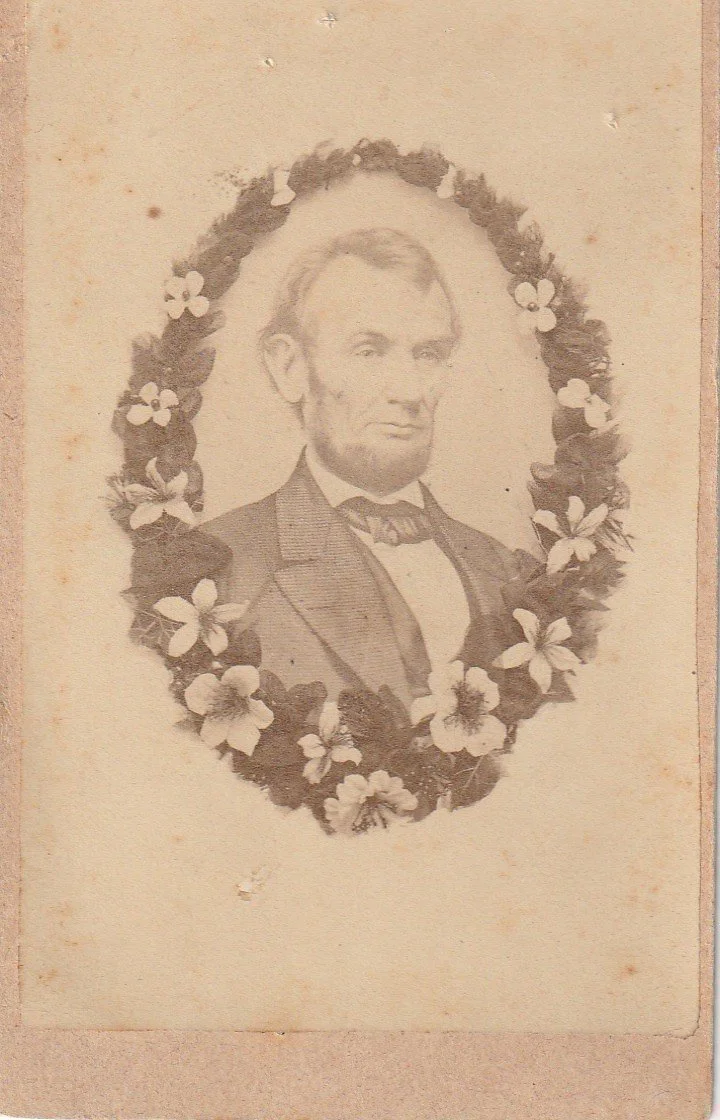
Abraham Lincoln Memorial Card (c. 1865)
This memorial card is an example of nineteenth-century printed mourning art, produced shortly after the assassination of Abraham Lincoln in April 1865. Such cards were designed for private contemplation and were often kept in homes, books, or Bibles rather than displayed publicly. They reflect the visual language of domestic remembrance common in the period. Memorial cards were not unique to Lincoln, but part of a broader nineteenth-century tradition of printed mourning art, produced for public figures as well as private individuals.
The composition centers on an oval portrait surrounded by a floral wreath, a motif widely used in mourning art to signify loss, reverence, and transience. The soft tonal printing and restrained ornamentation emphasize solemnity over spectacle, allowing the image to function as both portrait and keepsake. Many cards of this type were printed without text and with blank reverses, relying entirely on visual symbolism and the immediate recognizability of the subject.
As an object, this card sits at the intersection of art, print culture, and memory. It illustrates how Americans in the mid-nineteenth century encountered major historical events not only through newspapers and speeches, but through small, intimate works of printed art intended to be held, kept, and remembered.